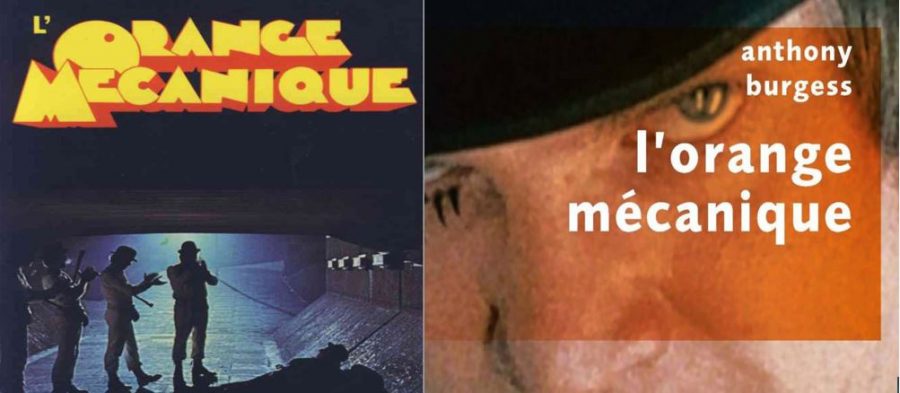
Nadsat is, of course, the invented language which forms the heart and identity of Anthony Burgess’s famous novella, A Clockwork Orange.
It is also the object of study of the team of linguists and literary historians behind this blog.
For the past two years, we have been examining Nadsat with the intention of working out what it is made of, how it functions, and whether it can be translated. On the surface, this may seem like an odd thing to do. The method in the madness is that, because Nadsat is an invented language, it lacks an accretion of culture, and therefore poses especial challenges to translators.
Not every invented language functions in this way, of course. Constructed languages like Esperanto or Volapuk were created with the express intention of displacing or augmenting existing languages, and in addition to being built with the capacity to be translated in mind, they have also developed their own linguistic cultures over time. Similar can be argued about art-languages like Klingon or Dothraki, which have seen real-world linguistic cultures spring up around their study by fans. More complete and developed art-languages, like Tolkien’s Elvish, were invented to express invented cultures, and again bring a cultural component to the translator to work with.
But, to borrow Halliday’s term, Burgess’s Nadsat is an ANTI-LANGUAGE. On one level, it is not intended to be understood, as it is an in-group slang of Alex and his droogs. On another, it has to be understandable, otherwise it functions as mere gibberish for the reader. We have been exploring Burgess’s strategies for making Nadsat comprehensible to readers, and also examining how translators have tackled the difficult task of rendering Burgess’s invention into other base languages than English.
To do this, we have been developing a PARALLEL TRANSLATION CORPUS, to allow us to study these translations side-by-side. The first results from this study, by Dr Sofia Malamatidou of the University of Birmingham, can be read here.
It is entitled “Creativity in translation through the lens of contact linguistics: a multilingual corpus of A Clockwork Orange“. We expect to have more outputs, examining what Nadsat is made of and how it works, as well as how translators in other languages, including Polish and German, have dealt with this task, in future papers. Additionally, we intend to use this blog to disseminate our preliminary work in categorising Nadsat, so that others can examine not only our work but also come to an understanding of how Nadsat functions in different base languages.