‘Beyond Nadsat’ now in print – and open access!

Regular readers of our irregular blog will recall the series of posts we did on Anthony Burgess’s other invented languages a couple of years back, of which there are more than a few. These collected thoughts have now been expanded, revised and published in the peer-reviewed Hungarian journal of English literature, The Anachronist, and (almost all) the journal is free to read or download in the spirit of open access thanks to the publishers at ELTE, Hungary’s foremost university.
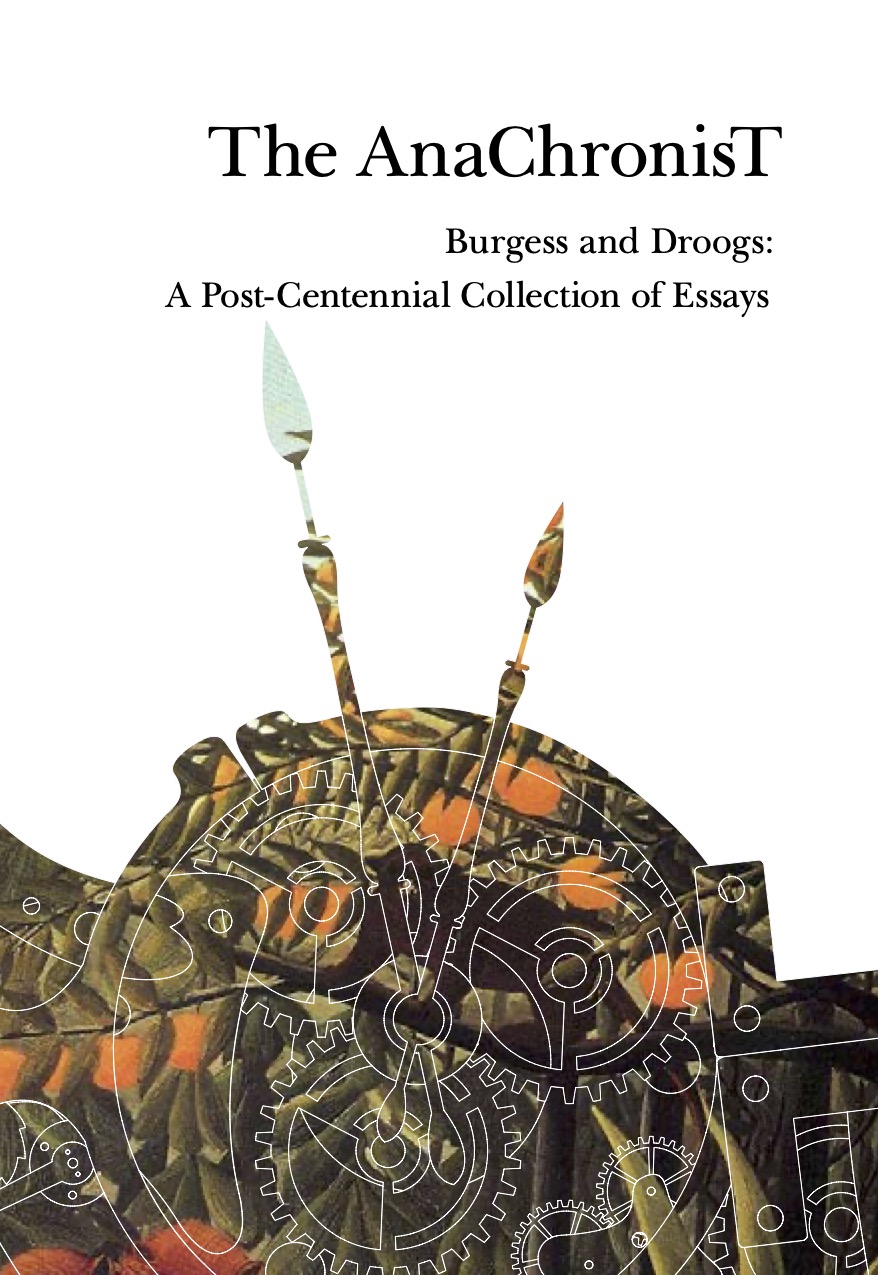
					View Vol. 20 (2022): Burgess and Droogs: A Post-Centennial Collection of Essays

In this paper, Burgess is used to demonstrate that the role of invented languages in literature goes far beyond the existing well-explored territories of Science Fiction (SF) or High Fantasy, though they predominate therein, and can also be found in historical novels, and even realist fiction, as Burgess’s variegated novels reveal.

This is Ponying the Slovo’s second publication for 2023, and it’s not even two weeks in. We might need a little lie-down!
Anyhow, feel free to read the article here, and the whole journal, all of which will be of interest to Burgess scholars, may be accessed from this page.
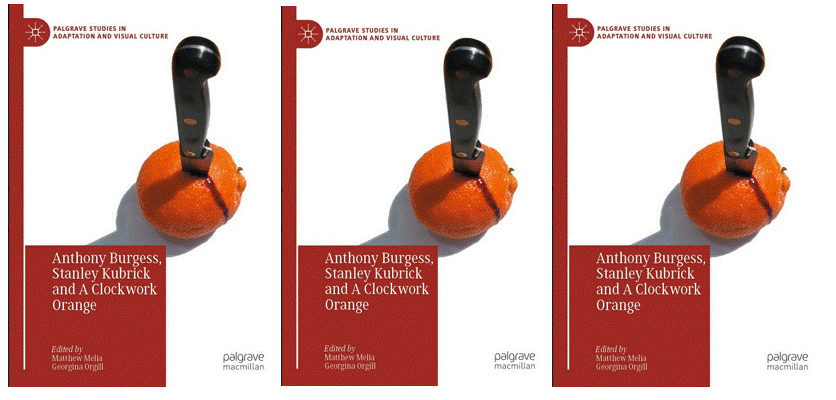
Book launch: Burgess, Kubrick and A Clockwork Orange

Happy New Year to readers of Ponying the Slovos!

We’re delighted to advertise the launch of Anthony Burgess, Stanley Kubrick and A Clockwork Orange a collection ably edited by Matt Melia and Georgina Orgill and which Jim and I were very happy to contribute a chapter to (based on our 2018 presentation to be found here – separate post coming very soon).

The details of book launch on 26 January at the International Anthony Burgess Foundation in Manchester can be found here. Jim is part of the panel of speakers talking about the book.

The Mysterious Case of the Missing Nadsats

Ponying the Slovos began as an attempt to define Nadsat, the invented language at the heart of Anthony Burgess’s A Clockwork Orange, and then examine how translators dealt with it. We believed that by isolating and examining the translation of an invented language, which does not emerge from an organic culture, it would help to reveal translator’s various strategies for translation more obviously.

Read more